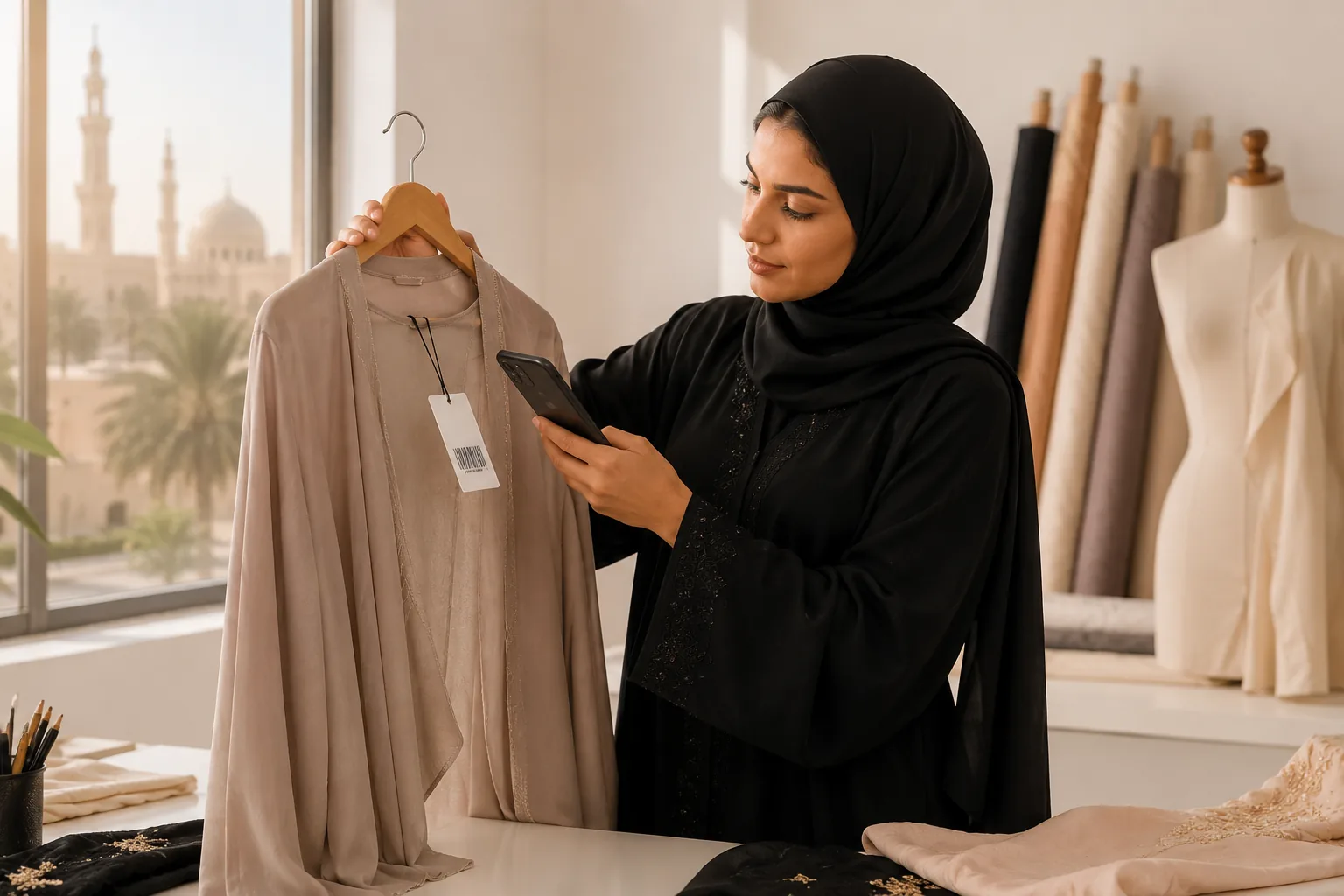
A fashion designer in Muscat supplies her abayas to three boutiques across the city. Each boutique tags her pieces differently when they arrive — one uses a sequential number starting from one each season, another uses a handwritten SKU that combines the designer's initials with a colour code they invented themselves, and the third stickers the items with a barcode generated in their own POS system that means nothing outside their four walls.
When a piece sells, the designer receives a message — sometimes a WhatsApp photo of the receipt, sometimes a weekly summary, sometimes nothing until the monthly settlement. When a piece is returned, the boutique has to re-identify it by description, because the tag it arrived with and the tag in their system do not match. When the designer wants to know which styles sold fastest across all three locations, there is no single source of truth — only three separate WhatsApp threads, three different formats, and a spreadsheet that is always one cycle out of date.
This is not a small problem. It is the standard operating reality for most independent fashion designers in Oman who supply to multiple boutiques, and it is the reason that consignment and brand-partner models in the regional fashion industry are often more administratively burdensome than they need to be.
The Root Cause: No Shared Item Identity
The fundamental issue is that each item a designer creates has no permanent, portable identity. The moment it leaves the designer's hands and enters a boutique's inventory system, it gets a new identity assigned by that boutique's software. If the piece moves to a second boutique, it gets another one. If it is returned unsold, it may get a fourth.
None of these identities travel with the item. They exist only inside the system that created them. And because no system created by a boutique was designed with the designer's perspective in mind, the designer is always looking at their own work through someone else's labels.
The solution is not a better spreadsheet. It is a universal item identity — a code assigned by the designer, at the point of creation, that remains the primary reference for that piece regardless of which boutique handles it, which system scans it, or how many times it changes location.
Crystal Designer Portal: One Registration, One Code
Crystal Designer Portal is a web application built for fashion designers in Oman — abaya designers, kaftan creators, tailor-made boutique labels, and ready-to-wear brands who supply their work to one or more retail outlets. The registration is straightforward: the designer enters their mobile number, their brand name, and uploads their logo. After OTP verification, they receive a permanent 5-digit designer code — their unique identifier within the Crystal ecosystem.
That code never changes. It belongs to the designer, not to any boutique. Whether they supply to one outlet or ten, the code is the same. It is the anchor around which every item they create is identified.
The 12-Digit Universal Barcode
Every item a designer registers in Crystal Designer Portal receives a 12-digit barcode built from three components:
The first three digits identify Crystal as the issuing platform — a fixed prefix that any Crystal Boutique installation recognises. The next five digits are the designer's unique code — the number assigned at registration that identifies who created the piece. The final four digits are the item sequence — a number that increments with each new item the designer registers, giving every individual piece its own identity within the designer's catalogue.
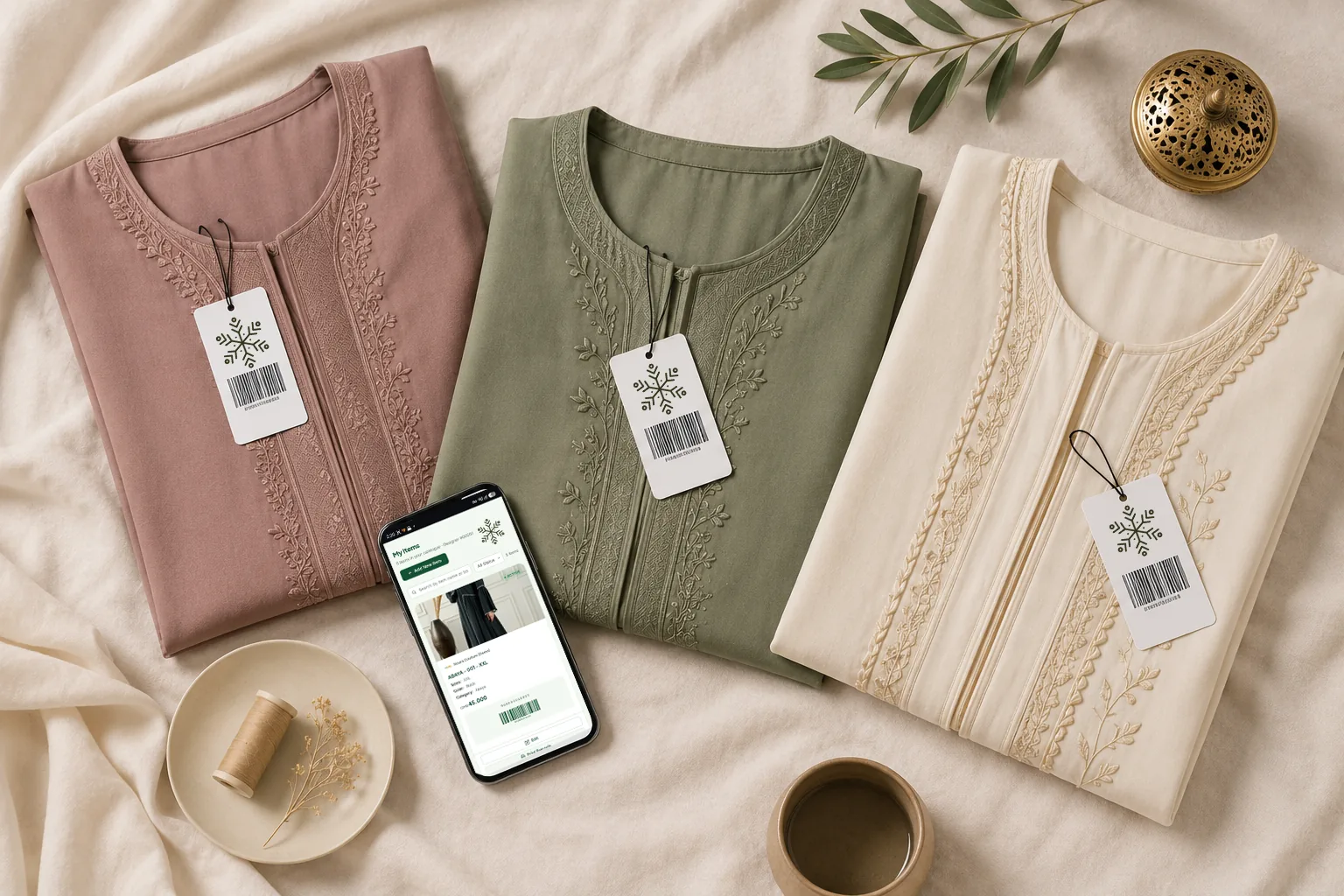
Put together, the barcode reads as: CRS · 00042 · 0017 — Crystal platform, designer 42, item 17. That combination is globally unique within the Crystal system. It will never be assigned to another designer or another item. And because it is a standard CODE128 barcode, it prints from any label printer, scans on any barcode reader, and displays on a mobile screen for phone-camera scanning.
What the Designer Can Do From Their Phone
Crystal Designer Portal is a PWA — a Progressive Web App — which means it runs in a mobile browser without any download from an app store. A designer can open it on their phone, register a new kaftan collection, assign barcodes to each piece, and print the tags before the items leave their workshop. The barcode preview is live on screen as the item details are entered — there is no separate step to generate or export the code.
The item catalogue shows every piece registered under the designer's code: the item name, category, colour, size, the barcode, and the registration date. Searching and filtering work across the full catalogue. A designer with four hundred registered items can find any piece in seconds by searching style name or item number.
For printing, the portal generates a print-ready barcode layout directly from the browser. A designer with a Bluetooth label printer connected to their phone can tag every piece in a collection in the time it takes to iron them.
How It Connects to Crystal Boutique
The Crystal Designer Portal does not exist in isolation. It is the designer-facing side of the Brand Partner module built into Crystal Boutique. When a boutique running Crystal Boutique onboards a designer as a brand partner, they link that designer's 5-digit code to their outlet. From that point, any item scanned at the boutique's counter that carries a Crystal designer barcode is instantly identified — the designer, the item details, and the consignment terms — without the boutique needing to manually re-enter or re-tag anything.
Sales against that item are automatically tracked against the designer's account within Crystal Boutique. The monthly settlement — how much the boutique owes the designer based on sales at the agreed payout percentage — is calculated from the same transaction data, not from a separate reconciliation process. The designer's own portal reflects what has been sold, because both systems read from the same item identity.
This is what makes the 12-digit code genuinely universal rather than just a different kind of tag. It is not a reference number that requires manual matching at the boutique end. It is a shared key that both the designer's system and the boutique's system understand — eliminating the translation layer that currently consumes hours of administrative time every month on both sides of the relationship.
The Wider Picture for Oman's Fashion Industry
Oman has a growing base of independent fashion designers — particularly in abayas, kaftans, and formalwear — who operate between their own ateliers and a network of boutique partners. Many of them are not running formal businesses in the traditional sense: they are skilled makers who have built a following and expanded into retail partnerships without the administrative infrastructure to support that expansion cleanly.
Crystal Designer Portal was built with that profile in mind. It requires no technical background, no accounting knowledge, and no integration project. A designer registers in under five minutes, begins assigning barcodes immediately, and has a permanent digital catalogue of their work from the first item they register. The barrier is low. The benefit scales directly with the number of items created and the number of boutiques supplying.
For boutiques, the benefit is equally direct. A boutique running Crystal Boutique that onboards brand partners with Crystal designer codes eliminates the re-tagging process entirely. Items arrive already identified. The boutique scans, confirms receipt, and the inventory is updated. No re-entry, no custom labels, no risk of misidentification at the point of sale or return.
The result, across a network of designers and boutiques both using Crystal, is a fashion supply chain where every piece has a single identity from creation to sale — one that travels with the item, is readable by any Crystal installation, and is owned by the designer who made it.
About Modern Digital World LLC
Modern Digital World LLC builds industry-specific business management software for retail and service operations across Oman and the GCC. Crystal Designer Portal and Crystal Boutique are part of the Crystal Retail Suite — a connected platform for fashion designers, boutique operators, and brand partners. Contact us to register your brand or onboard your boutique.
Get in touch →